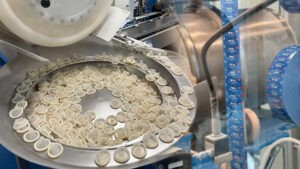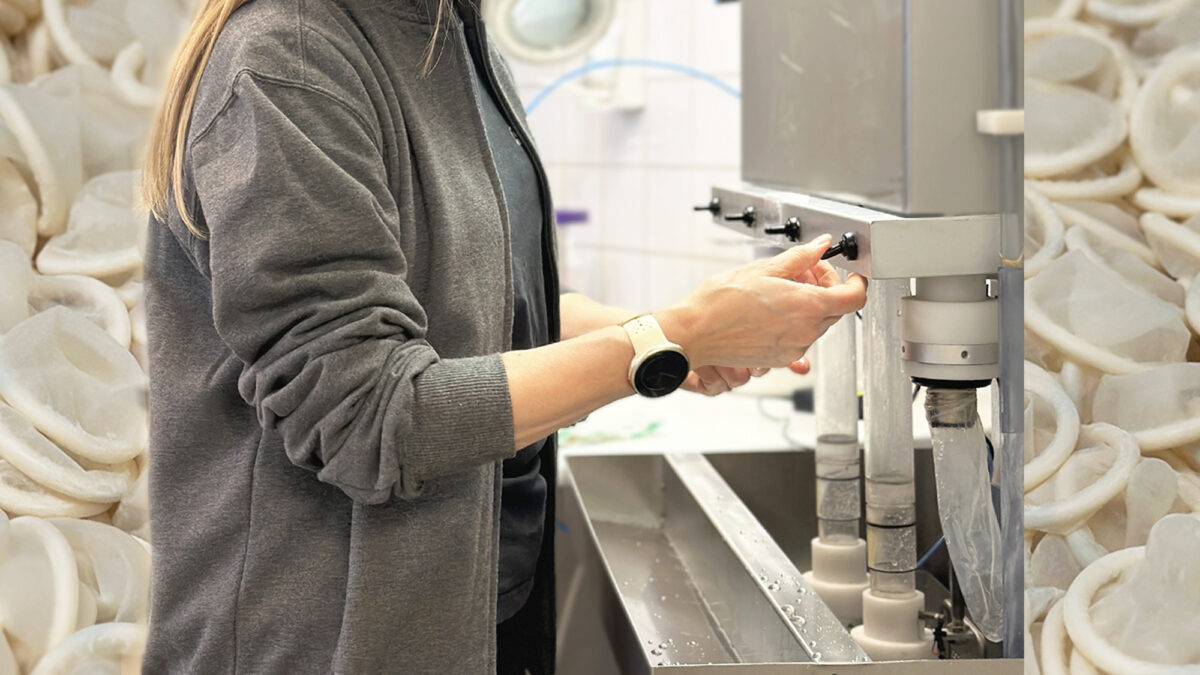
Behind the scenes at the only condom laboratory in the Nordics
Did you know that RFSU AB is the only condom manufacturer in the Nordic region that has its own accredited laboratory? But what does that mean—and what do RFSU do at the laboratory?
How RFSU ensures condom safety in the Nordics
When it comes to condoms, quality and safety are crucial.
RFSU is the market leader in condoms in the Nordic region and operates its own condom factory in Hennan, Sweden. Connected to the factory is a laboratory where tests and inspections of the condoms are conducted. The laboratory is staffed by a laboratory manager and a laboratory assistant, who together form the quality control department at RFSU AB.
The condom laboratory at RFSU has one key focus: ensuring that the condoms distributed from the factory have undergone thorough inspections and testing.
A major advantage of having an accredited laboratory directly connected to production is that RFSU has full control over product quality throughout the entire manufacturing process.
- The tests are conducted in accordance with the international standard for condoms, ISO 4074.
- Condoms are classified as medical devices and must therefore meet the requirements of the EU’s Medical Device Regulation (MDR) to ensure safety, quality, and performance
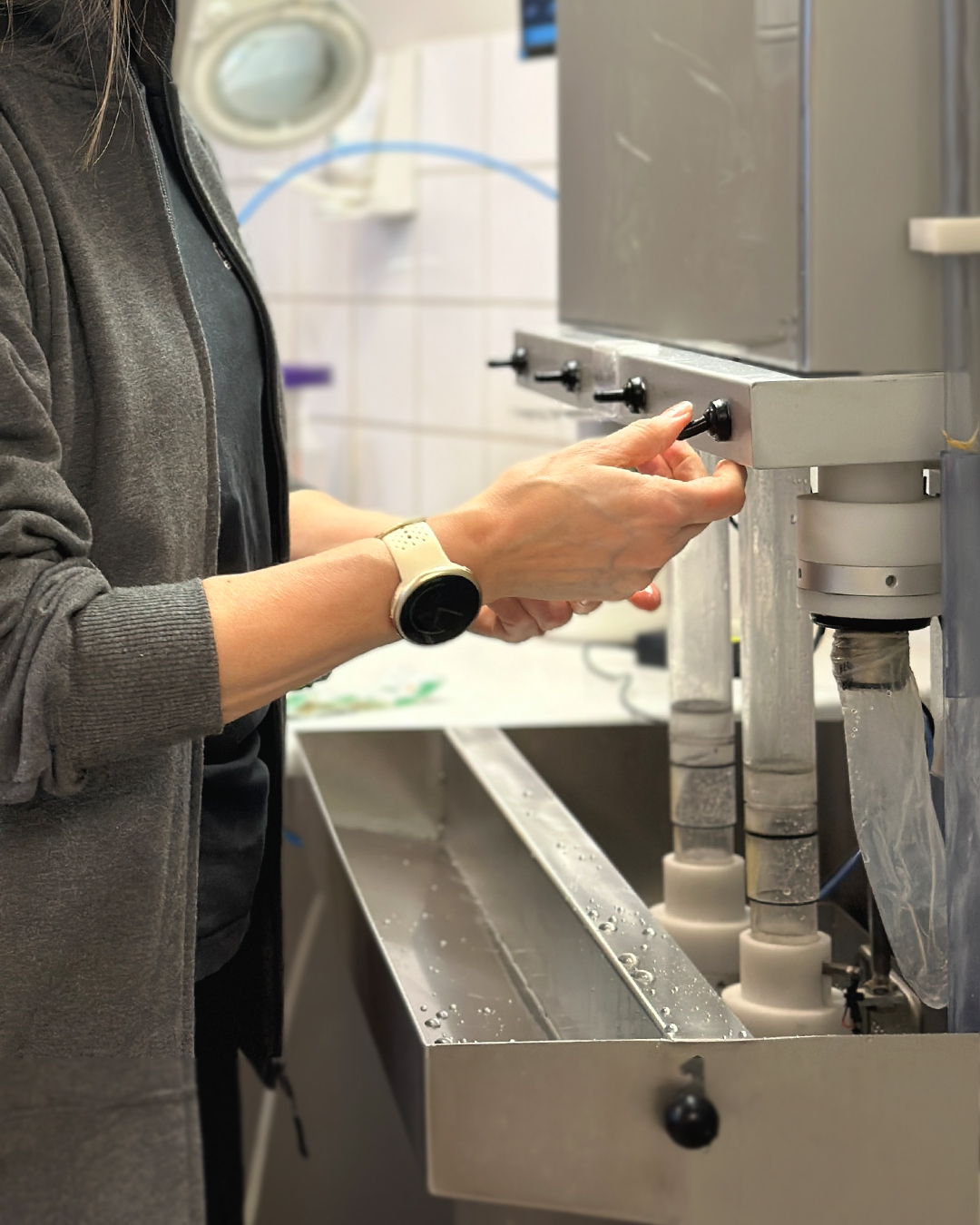
Here’s how it works at RFSU’s condom laboratory
Step 1: Quality tests of the condoms
- Random inspections: When a shipment of condoms arrives at the factory, an incoming inspection is conducted in the form of random sampling to check whether anything happened to the condoms during transport.
- Verification: The shipment is also verified to ensure it matches what was ordered—for example, that the condoms are the correct length and width.
- Expansion test: The verification process also includes a burst test to check the condom’s volume and pressure. To be approved, a condom must be able to expand with as much as 18 liters of air before it bursts.
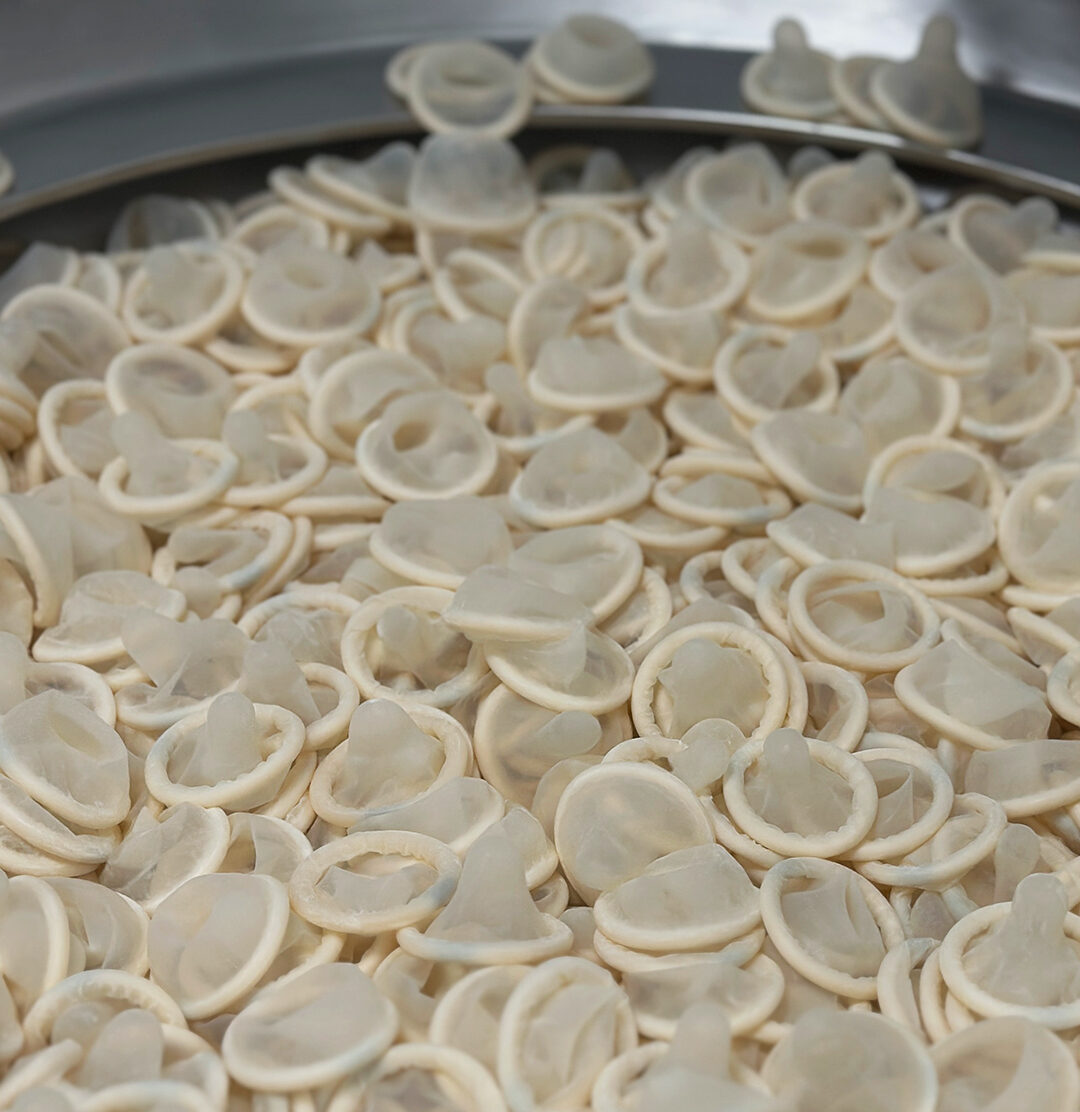
Once the samples from the condom shipment have been approved, the condoms can be sent on to the factory. There, a drop of silicone is applied to the condoms, and they are then packaged in strips made of cellophane.
Learn more about How condom’s made at RFSU’s condom factory.
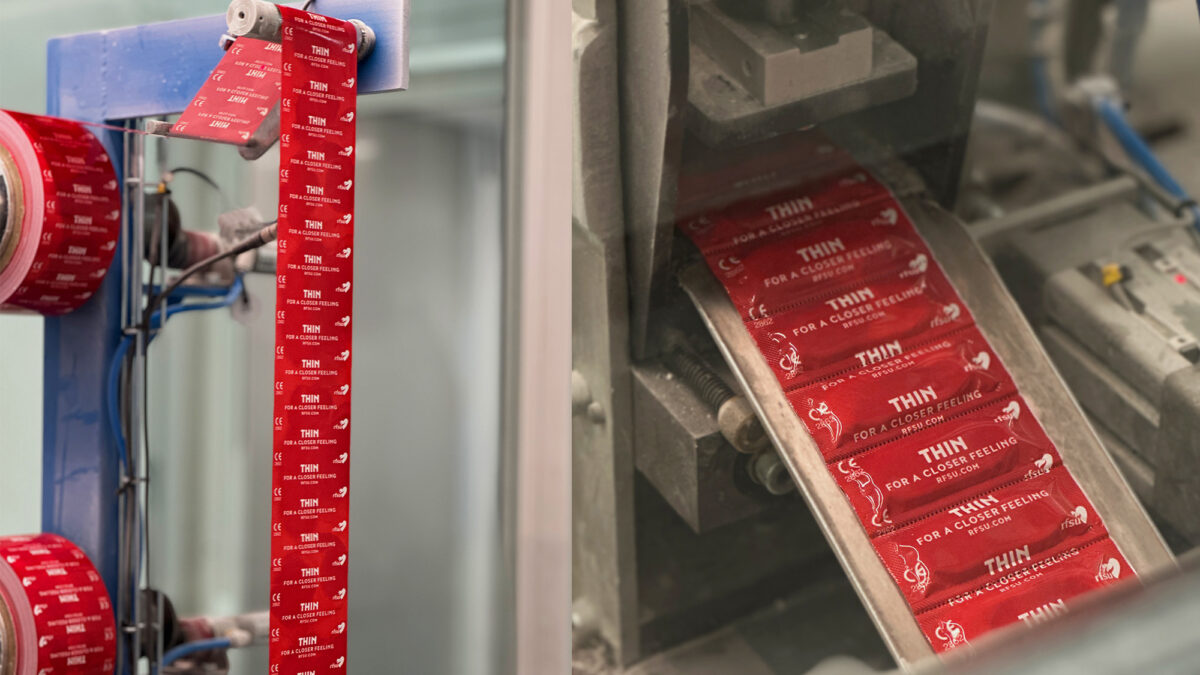
Step 2: Quality controls during the condom production
During production, several quality controls are performed to ensure that nothing has happened to the condoms in the machines, that could damage the latex or the cellophane film.
The process controls consist of:
- Inspection of the condoms for holes.
- Leak testing of the strips.
These tests are performed continuously throughout production.
Why is a leak test performed on condoms?
It is important that the cellophane wrapper—the so-called “strip”—seals completely tightly around the condom. That is why a leak test is performed on the wrapper.
Why is a hole test performed on condoms?
An electronic hole test is performed to ensure that the condom does not have any microscopic holes.
What happens if the laboratory finds a defect in a condom?
If a condom is found to have been damaged during handling at the factory or if the cellophane wrapper does not seal tightly, production is paused and a troubleshooting process is initiated. Random checks are also conducted to ensure that all condoms have the correct expiration date and are labeled with a batch number. By using the batch number, the condom can be tracked throughout the entire manufacturing and sales process.
Watch the video to see how the laboratory tests are conducted:

Step 3: Final inspection of the condoms
Once the batch has been fully produced, a final inspection is conducted before everything is compiled into a report.
A final inspection includes:
- Volume and pressure controls
- Leak test of the strips
- Labeling inspection
- Hole test
Step 4: Release of approved condoms
Once all tests have been completed, the lab releases the approved condoms, and they can proceed to the final step: packaging in consumer and retail packaging.
At the time of release, a number of reference samples are taken and stored at the factory for seven years.
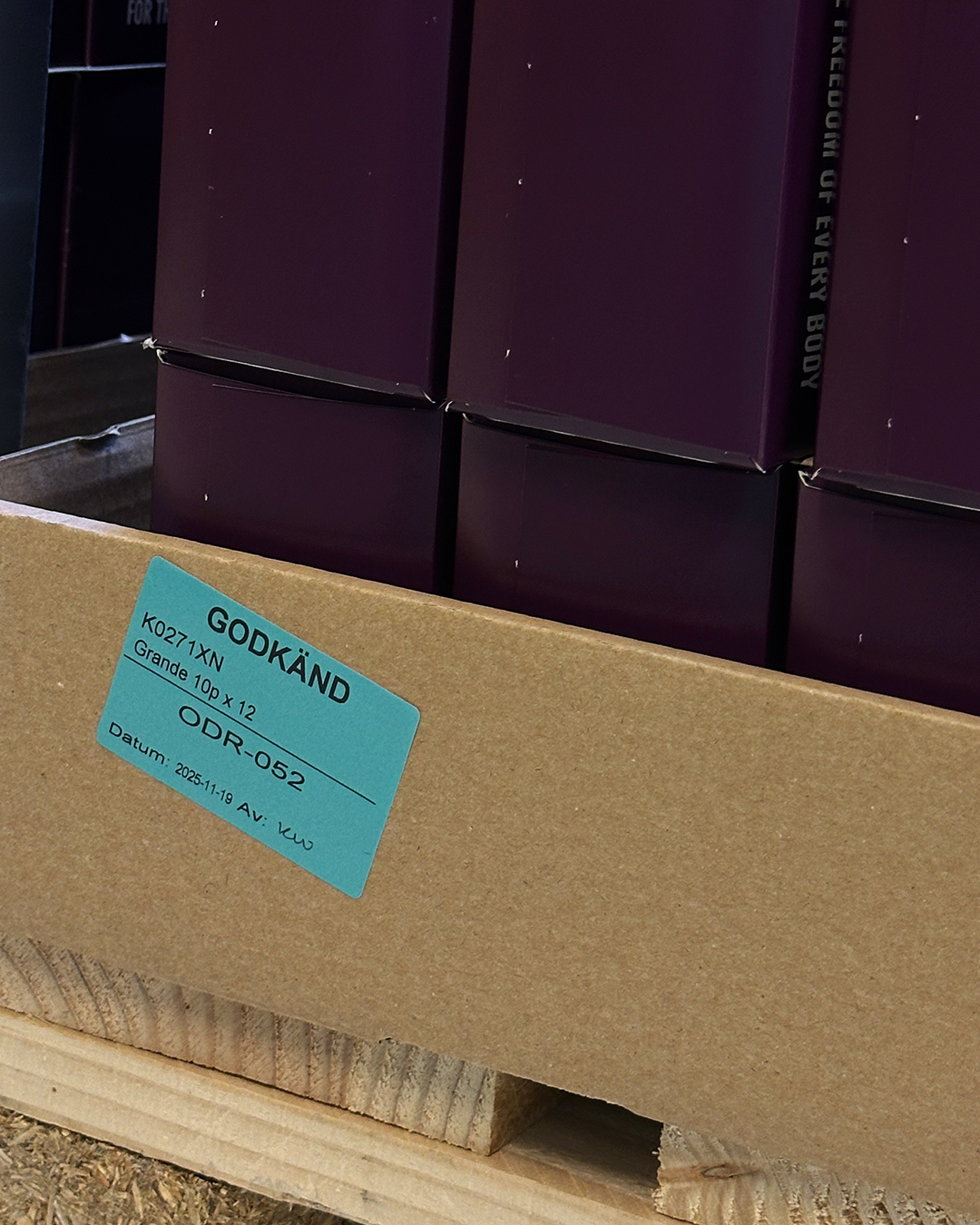

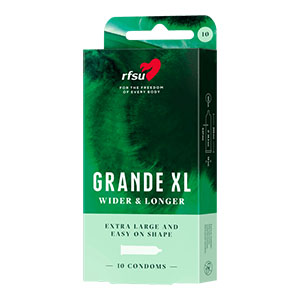
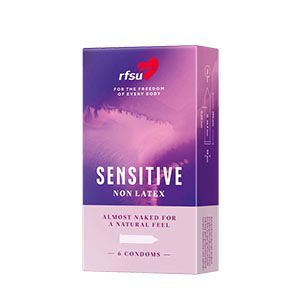
RFSU Grande - large condom with generous fit
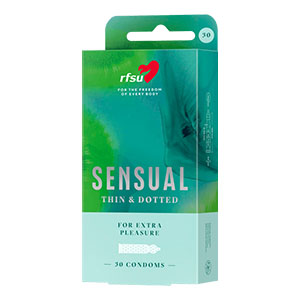
RFSU Sensual - dotted condom for enhanced sensation

The importance of documentation
In addition to conducting inspections and quality tests—from the moment the condoms arrive at the factory until they are ready to be shipped to retailers—it is equally important that every test result is documented.
The lab staff works systematically through all processes. Every 16 months, the lab is inspected by Swedac, Sweden’s national accreditation organisation. During the inspection, the laboratory must be able to present all documentation, and Swedac also verifies that all procedures are being followed. If a lab fails to meet the requirements, it risks losing its accreditation.
RFSU ensures high-quality condoms
With its accredited laboratory and rigorous quality tests, RFSU can ensure the high quality of its condoms—and peace of mind for end users.
It is very rare for RFSU’s customer service to receive complaints about condoms. And when a condom breaks during use, it is usually because it was not handled properly.
Quality and safety in accordance with international standards
RFSU AB’s laboratory is accredited under ISO 17025, the international standard for the competence of testing and calibration laboratories. The accreditation covers testing methods for latex condoms.
The company is also certified in accordance with MDR 2017/745 (regulations for condoms) and IVDD 98/79/EC (for pregnancy and ovulation tests).
The entire organization is certified to ISO 13485, an international standard for quality management systems in the medical device industry that ensures products meet regulatory requirements and maintain high quality throughout their entire lifecycle—from design and manufacturing to distribution.