


Sex doesn’t always go according to plan. And that’s kind of the point. You might think it’s just another ordinary night. A drink with friends. An ordinary night of studying. A short camping trip to a nearby lake. But suddenly, something changes. A glance turns into something more. A moment becomes a connection.
And just like that – you wish you had come prepared.
BRIDGING THE GAP BETWEEN INTENTION AND REALITY
Most people have a positive attitude towards condoms. According to RFSU’s annual survey*, seven out of ten young people in Sweden want to use condoms with a new partner. But good intentions don’t always turn into action. Even when people plan to use a condom with a new partner, many don’t in the actual moment.
One of the key reasons not to use a condom? They simply didn’t have one with them—or they forgot to use it in the moment.
At the same time, everyday life rarely follows a script. Moments happen when you least expect them. And that’s why being prepared shouldn’t be a big decision, it should be a small habit.
INTRODUCING BANG – POCKET-READY CONDOMS
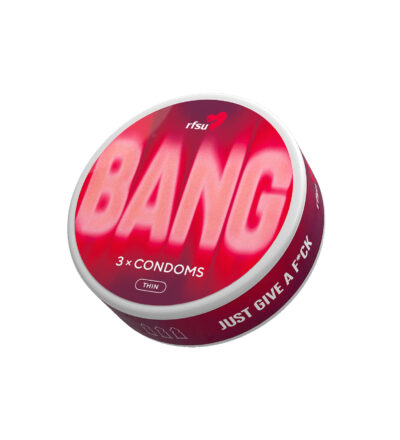
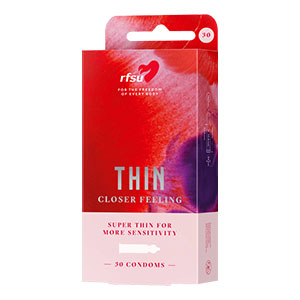
Bang is RFSU’s limited-edition condom designed for one simple purpose: to make it easier to always have protection with you. It’s a small, pocket-sized, refillable box containing three RFSU Thin condoms – created to fit naturally into your everyday life. We know that traditional ways of carrying condoms don’t always match how people move today. Many don’t carry bags or wallets, especially in social settings.
Bang isn’t just about design—it’s about behaviour.
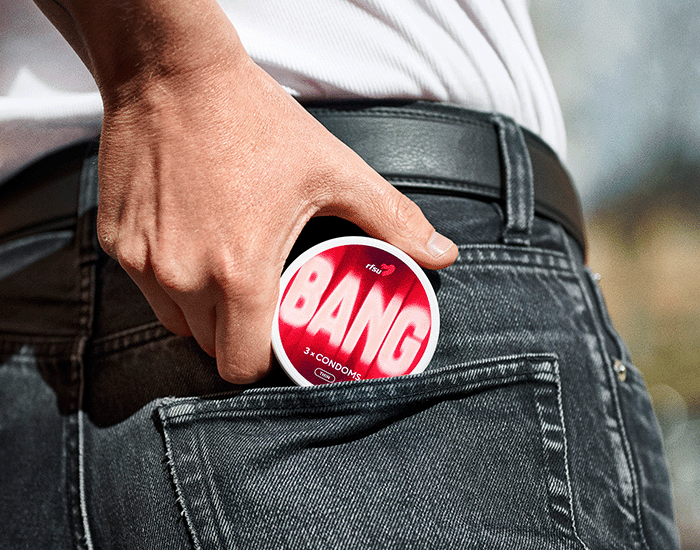
A PRODUCT BUILT AROUND REAL HABITS
Inspired by the familiar format of everyday carry items, Bang taps into an existing habit. While young people often forget their condoms, snus and nicotine pouches is one product that young people often carry with them. In recent years, the number of young people who use snus has increased steadily and today more than one in five young people in Sweden use snus daily, according to Statistics Sweden**.
“We know that the will is there, but that it often falls on something as concrete as not having the condom with you. Then communication is not enough, we need to change the behaviour itself. With Bang, we take a habit that is already established by others and make it ours – by filling the box with condoms,” says Anette Otterström, Head of Brand & Communication Nordic at RFSU AB.

A CAMPAIGN TO INFLUENCE BEHAVIOUR
Bang is part of the wider “Come Prepared” campaign—built on a simple but powerful idea: even when you think you won’t need a condom, you might still need one. The message is clear: positive surprises happen. Be ready for them. Or as the campaign puts it: Are you ready to give a f*ck?
The creative campaign developed by Valtech Radon takes the habit of always carrying the can with you, and is launched on social media, outdoors and at festivals throughout the Nordic region. RFSU also collaborates with a larger number of influencers to activate the campaign, including XXX and XXX in Sweden.
FOR THE FREEDOM OF EVERY BODY
At RFSU, we believe sexual health is about freedom—the freedom to say yes, no, or maybe. And the freedom to be ready when it matters. Bang is a step towards making that freedom easier to access.
Profits from RFSU’s sales of condoms and other products are used to spread information, nationally and internationally, about sex and relationship issues. Through knowledge, commitment and advocacy, RFSU works for a world where all people can freely decide over and enjoy their own body and sexuality.


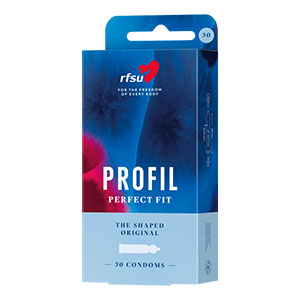
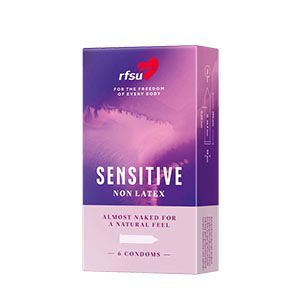
2019-04-01
1000
Sensual - dotted condom for enhanced sensation
179
![sensual-knottrig-kondom-rfsu]()
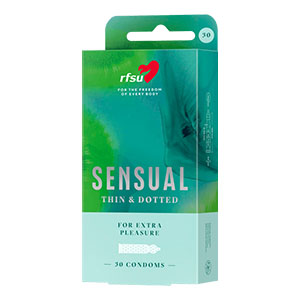
RFSU Sensual - dotted condom for enhanced sensation
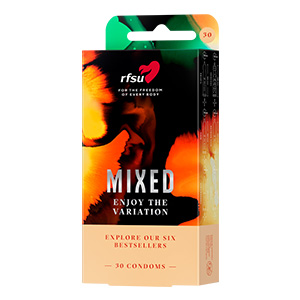
2018-12-11
1000
Tasty - condoms with flavour and scent
85
![tasty-condom-flavour-rfsu]()
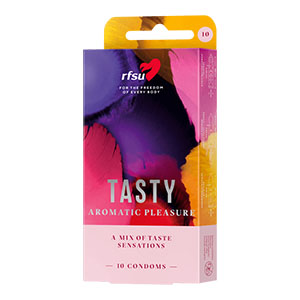
RFSU Tasty - condoms with flavour and scent
2019-04-01
1000
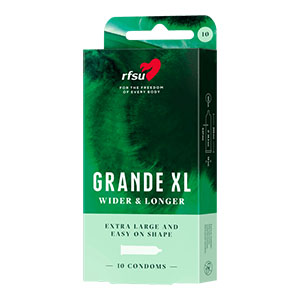
Grande - large condom with generous fit
185
![stora-kondomer-grande-rfsu]()

RFSU Grande - large condom with generous fit
* The Condom Check survey was conducted in August 2025 as an online survey via the Bilendi panel in Sweden, Norway, Denmark, and Finland. Data collection targeted a nationally representative sample of people aged 16 to 65, with over 1000 interviews conducted in each country and a particular focus on the age group of 16-35.
**Source: Statistics Sweden – According to Statistics Sweden’s statistical database, 21 percent of 16-29 year olds in Sweden use snus daily, among women the proportion is 16 percent and among men 26 percent. The proportion has increased over the past five years, in 2021 just under 16 percent of young people (7 percent of women and 24 percent of men). Source: https://www.statistikdatabasen.scb.se/pxweb/sv/ssd/START__LE__LE0101__LE0101H/LE01012021H06/