Best sex positions for getting pregnant – facts & myths
When you’re trying to get pregnant, it’s natural to want to do everything possible to support conception. A common question is whether certain sex positions can increase the chances of becoming pregnant. In this text, we explore whether any sex positions actually improve the likelihood of conception – and which other factors truly influence fertility.
What Does the Research Say?
No studies have been able to prove that specific sex positions increase the chances of getting pregnant. The female body is naturally designed to transport sperm to the egg, regardless of the position during intercourse. What truly matters is timing in relation to ovulation, the overall health of both partners, sperm quality and quantity – as well as regular intercourse during the fertile window.
How Sperm Travel to the Egg
To understand why sex positions are unlikely to make a significant difference, we first need to look at the body’s natural systems, which work to optimize sperm transport.
- During the fertile days, cervical mucus becomes thinner and more permeable, functioning like a kind of highway for sperm.
- The uterus makes natural contractions that help move sperm upward. In addition, the egg and the reproductive organs release chemical signals that attract sperm — a sort of biological GPS.
- Gravity plays a minimal role because sperm swim actively and are not significantly affected by body position. In fact, sperm reach the cervix within seconds after ejaculation.
- Cervical mucus stores and transports sperm for several days, and only the strongest sperm reach the egg – regardless of the starting position.
Sex positions for getting pregnant (Theoretical Reasoning)
Even though science does not support the idea, there are theoretical reasons why certain positions are often discussed. Deeper penetration may place sperm closer to the cervix; some positions may reduce semen leakage (keeping sperm inside longer); gravity may theoretically assist downward movement; and certain angles may offer better access to the cervical opening. However, it is important to remember that these are only theories without scientific evidence.
- Missionary
- Doggy style
- Spooning
- Woman on top
- Raised legs
The following sex positions are said (based on theoretical reasoning) to influence conception – but there is no scientific proof to support this:
Missionary
The missionary position is often mentioned because it allows for deep penetration and is a familiar, comfortable position for many. In reality, it works no better than any other position.
Doggy style
Doggy style (penetration from behind) is sometimes suggested because it can allow for deeper penetration and a different angle toward the cervix, but no evidence shows that this offers any fertility advantages.
Spooning
The spooning position is highlighted as a relaxed, comfortable option for both partners, but comfort is its only real benefit.
Woman on top
When the woman is on top, she can control depth and angle. The primary advantage of this position is simply that she may feel more in control during intercourse.
Raised legs
Raised legs may allow deeper penetration and provide theoretical gravitational support, but the body transports sperm effectively regardless of leg position.
What Really Affects Your Chances of Getting Pregnant
Instead of focusing on sex positions, prioritize the factors that are actually proven to influence your chances of becoming pregnant.
When a healthy man and a healthy woman have unprotected sex, the chance of becoming pregnant is around 2–4% per intercourse. If the same couple tries to conceive by having unprotected sex throughout the entire cycle, the chance increases to about 20–25%.
Timing Around Ovulation
- 2–3 days before ovulation is when the chances of conception are highest.
- Having sex every other day during the fertile window (for example, days 10–16 in a 28-day cycle) provides good chances of conception.
- Having sex only on the day of ovulation can reduce the likelihood of fertilization. For the best chance of pregnancy, it is recommended to have sex from about three days before ovulation until the day after ovulation.
- Regular sex throughout the whole cycle can feel more relaxed (instead of trying to hit the exact right day). Sperm can survive for up to five days, so they can already be present and waiting for the egg to be released — even on days without sex.
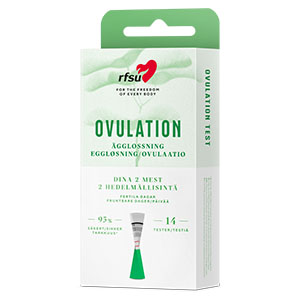
- To track your ovulation, you can observe changes in your cervical mucus, measure your basal body temperature every morning, and use ovulation tests. You can also use an ovulation calendar to calculate when you are likely to ovulate and increase your chances of becoming pregnant.
Healthy Fertility Means:
- The woman’s ovaries function well so that good-quality eggs can mature.
- The woman is ovulating — if she has regular periods, she most often has regular ovulation as well.
- The fallopian tubes function so that an egg can be picked up and fertilized by sperm swimming up into the tubes, and so that the fertilized egg can be transported down into the uterus.
- The man has an adequate number of sperm that move properly.
- The uterine lining is able to receive a fertilized egg so it can implant and continue to develop.
Women’s Lifestyle Factors
A woman’s fertility is also influenced by lifestyle factors. A healthy, varied diet, regular physical activity, maintaining a normal body weight, avoiding smoking, and reducing alcohol consumption can all help create better conditions for conceiving. If you are planning a pregnancy, it is also recommended to start taking folic acid before conception.
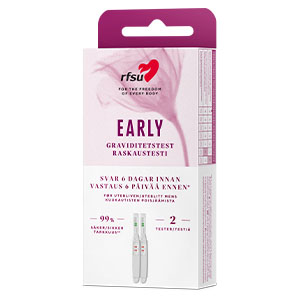



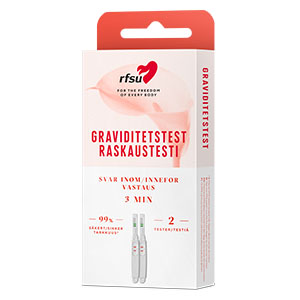
RFSU Weeks - pregnancy test with week indicator
Male Sperm Quality
A man’s sperm quality can be affected by a variety of factors, both lifestyle-related and health-related. Smoking, alcohol, drugs, and excess weight can impair both the number of sperm and their motility. Stress, poor diet, and high heat around the testicles (for example from tight clothing or frequent sauna use) can also have negative effects. Factors that can improve sperm quality include regular ejaculation — every 2–3 days is optimal — zinc and selenium supplements, regular exercise, and effective stress management.
Sexually Transmitted Infections
Infections such as chlamydia and gonorrhoea can negatively affect sperm quality and, in some cases, reduce motility and survival. If you haven’t been tested in a while, or suspect a risk of STI, it may be wise to get tested — especially when trying to conceive.
When to seeking Help to Get Pregnant?
In most cases, it is recommended to seek medical advice if you have been trying to conceive for one year without success. If you are over 35, have irregular periods, or have conditions such as PCOS or endometriosis, it may be appropriate to seek help after six months. Men with known risk factors — for example after chemotherapy — may also benefit from an earlier evaluation.
Source: www.1177.se and fact-checked by RFSU clinic.